Meet the friends
Tully the Hopnut
Tully counts things. Acorns, pebbles, curly leaves, and the long slow minutes while a berry makes up its mind about being ripe. When a day goes muddly, Tully is the one who puts it back in order.
Who Tully is
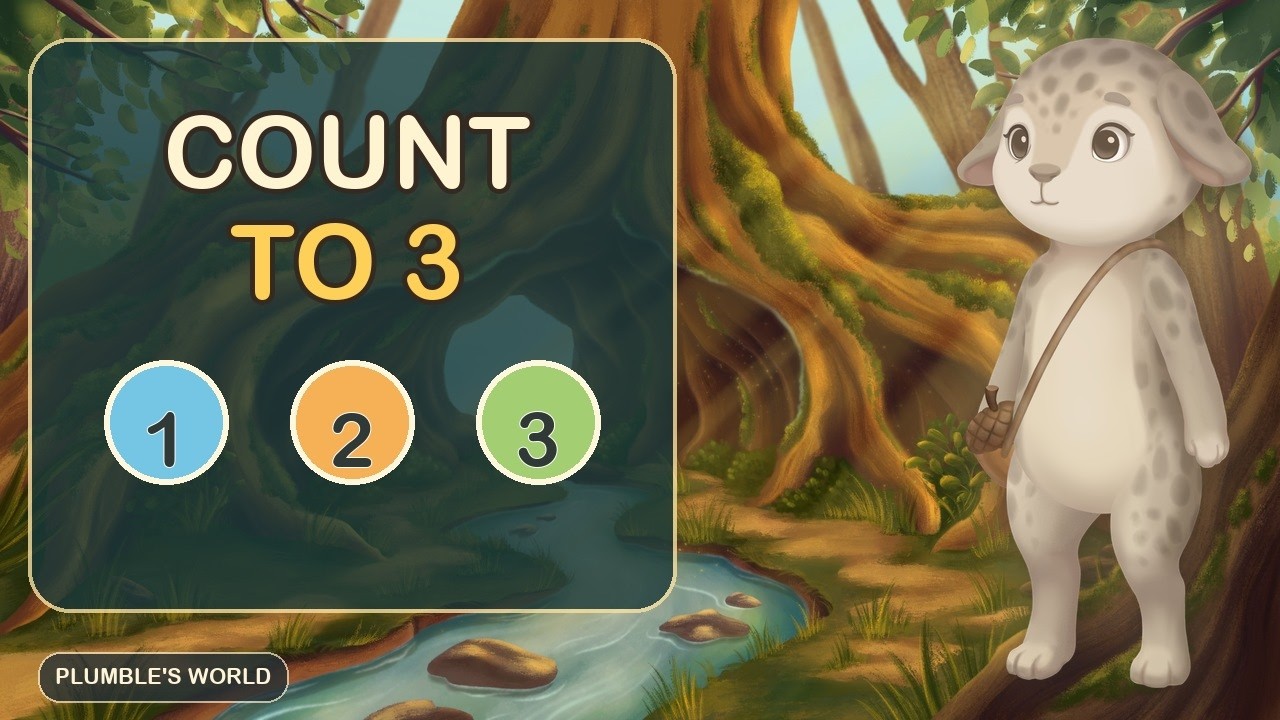
Tully is a Hopnut. Soft dappled fur in grey and brown and cream, longer legs than you would expect on something that round, and long floppy ears that swing about whenever there is hopping to be done. There is always a small acorn-shaped pouch slung across the chest, and there is usually something inside it worth counting.
Hopnuts do not glow. That is worth saying out loud, because nearly everyone else in these woods does. Tully counts and sorts and keeps the beat instead, which turns out to be its own kind of steady.
“One, two, three. Just right.”
What Tully carries
Counting, sorting, and rhythm. When a feeling gets too big to hold, Tully often just starts a beat, and a beat helps more than words do.
The pouch
Small, acorn shaped, worn across the chest. Whatever is in it today is what everyone is counting today.
The growth edge
Tully would dearly like to tidy everything into just right. Feelings will not go in the pouch, and learning to sit with that is the work.
 26 sec
Meet Tully
A short hello.
Twenty-six seconds, if that is all you have
A very short introduction, and a good look at the pouch. It shows the thing Tully does when a feeling gets too big for counting: taps out a gentle rhythm instead, pat, pat, pat.
Tully’s songs
Two so far, both of them counting songs, both slow enough to join in with. Tap either one to play it right here.

Counting when it is not really about counting
Tully’s trick is worth borrowing. Counting gives a child something to do with a hard minute, and it works because it is a rhythm, not because it is maths. Waiting for a turn, waiting for the toast, waiting to be picked up. Count the thing in front of you and the minute gets shorter.
We wrote a longer piece for grown-ups about exactly this, if the waiting is the part that keeps going wrong at your house.
Plumble’s World is a calm, gentle media experience for children ages 2 to 5. It is not a therapeutic or clinical program, and it is not a substitute for advice from your pediatrician.